
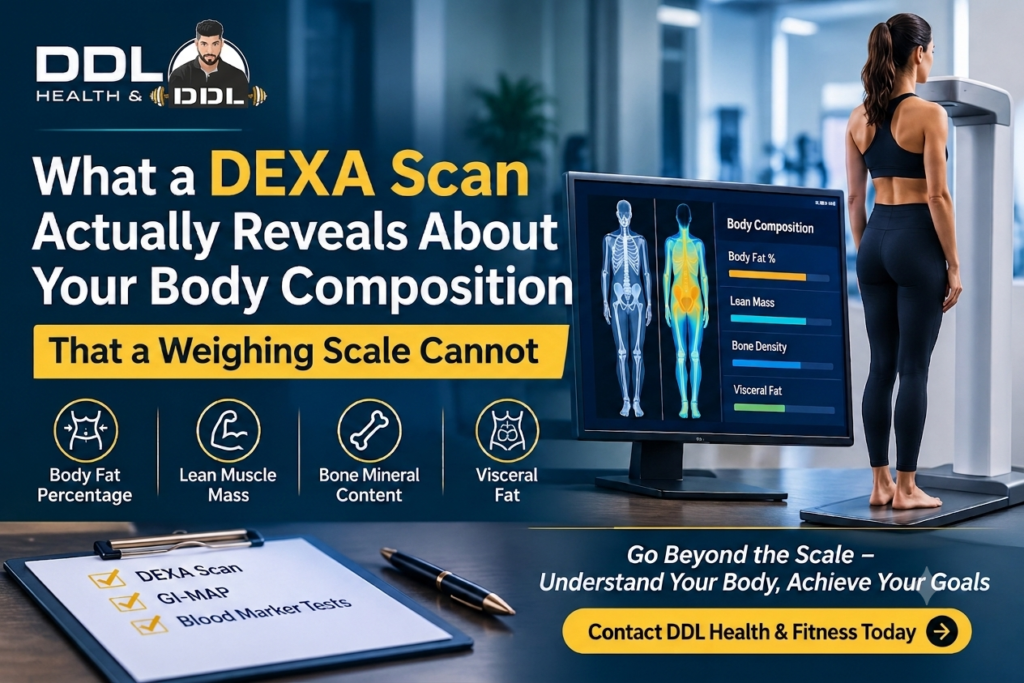
Your weight tells you how much you weigh, but does it reveal how much body fat you carry, how much lean tissue you have, or how your body composition is changing? Not entirely. A DEXA scan provides a more detailed picture of your body composition, helping you understand changes that a conventional weighing scale cannot show.
For individuals working towards fat loss, muscle development or improved overall fitness, understanding body composition can make a significant difference. Instead of relying solely on weight measurements, a more comprehensive assessment can help guide training and nutrition decisions. At DDL Health & Fitness, a goal-focused approach to fitness emphasises understanding individual needs and tracking meaningful progress. This case study explores how DEXA scans, alongside relevant health assessments such as GI-MAP and blood marker tests, can contribute to a more informed and personalised fitness journey.
1. The Challenge: When the Weighing Scale Does Not Tell the Full Story
Consider an illustrative client in Dubai who has been following a regular workout routine and making dietary changes for several months. Although their strength and fitness have improved, their body weight has remained relatively unchanged.
This can be frustrating, especially when the main goal is fat loss.
However, body weight alone does not distinguish between fat mass, lean soft tissue, bone mineral content and changes in body water. A person may lose fat while gaining or maintaining muscle, resulting in only a small change on the scale.
This is why tracking body composition can provide useful information beyond conventional weight measurements.
2. What Does a DEXA Scan Reveal?
A Dual-Energy X-ray Absorptiometry (DEXA or DXA) scan uses two low-dose X-ray energy levels to estimate different components of the body. A whole-body body-composition scan can provide information that a standard weighing scale cannot.
Key measurements include:
- Body Fat Percentage: Estimates the proportion of total body mass made up of fat.
- Total Fat Mass: Estimates the overall amount of fat in the body.
- Lean Soft Tissue Mass: Estimates non-fat, non-bone soft tissue, including muscle, organs and body water.
- Bone Mineral Content: Measures the mineral content of the bones.
- Regional Body Composition: Shows how fat and lean tissue are distributed across different body regions.
- Estimated Visceral Fat: Some DEXA systems provide an estimate of fat around the abdominal organs.
These measurements can help individuals and qualified professionals understand whether a fitness programme is producing changes beyond total body weight.
It is important to remember that DEXA estimates body composition rather than directly measuring every individual muscle or fat deposit. Results can also be influenced by hydration, positioning, equipment and scan procedures.
3. Case Study: Looking Beyond Weight Loss
Returning to our illustrative client, the initial assessment focuses on more than their weight. A DEXA scan provides a baseline for estimated fat mass, lean soft tissue and regional distribution.
The findings can help the fitness professional and client identify priorities. For example, if the goal is to reduce body fat while maintaining lean tissue, the training programme may place greater emphasis on progressive resistance training, appropriate recovery and sufficient nutritional support.
Rather than making changes based on daily weight fluctuations, progress can be reviewed using consistent measurements over time.
The objective is not simply to make the scale number smaller. It is to work towards a healthier, stronger and more sustainable body composition.
4. How GI-MAP and Blood Marker Tests Add Further Context
A DEXA scan focuses on body composition. It does not assess digestive health, gut bacteria, hormone levels or metabolic function. Other assessments may provide different information when recommended by an appropriate healthcare professional.
GI-MAP and Gut Microbiome
GI-MAP is a stool-based molecular test that examines selected microbial and other gastrointestinal markers. Gut microbiome assessments can offer information about the microorganisms present in a stool sample, but their clinical interpretation has limitations. They should not independently determine a diagnosis or treatment plan.
Blood Marker Tests
Depending on an individual’s health history and goals, a healthcare professional may recommend relevant blood tests. These may include selected markers related to blood glucose regulation, cholesterol, iron status, thyroid function or other areas of health.
Together, these assessments address different questions. DEXA provides body-composition estimates, while stool and blood tests may offer additional health information when clinically appropriate.
5. Turning Assessment Results into a Personalised Fitness Plan
Information is valuable only when it supports sensible decisions. Once suitable assessments have been reviewed, the next step is developing a training and nutrition approach that reflects the individual’s goals, abilities and health requirements.
A structured programme may include:
- Personalised Resistance Training: Build strength and support lean tissue development.
- Goal-Based Nutrition: Establish appropriate energy and nutrient intake.
- Progress Monitoring: Review body-composition trends and training performance.
- Recovery Planning: Include sufficient rest, sleep and manageable training volume.
- Regular Check-Ins: Adjust the programme according to progress and individual feedback.
For anyone searching for a personal fitness trainer in Dubai, one-on-one personal training can provide individual guidance, accountability and a programme built around specific goals.
6. Why a More Informed Approach Matters
The best personal trainer in Dubai is not simply someone who provides a workout routine. Effective coaching involves understanding individual goals, tracking progress and adapting the programme when necessary.
For people comparing the best personal trainers near me, look for professionals who prioritise personalised training, responsible progress monitoring and collaboration with qualified healthcare practitioners when medical assessments are involved.
At DDL Health & Fitness, a goal-focused approach to personal training can help individuals work towards their fitness objectives through structured workouts, individual guidance and consistent progress reviews.
DEXA scans and other health assessments are not replacements for good training, nutrition or medical advice. They are tools that, when appropriately selected and interpreted, may help provide a broader understanding of individual progress.
Add a stronger DDL Health & Fitness call to action
Conclusion: Stop Measuring Progress by Weight Alone
Your weighing scale gives you one number. A DEXA scan can provide a more detailed view of estimated fat mass, lean soft tissue, bone mineral content and regional body composition. It helps you understand what is changing beneath the surface, giving you a clearer perspective on your fitness journey.
When combined with appropriate nutrition, consistent training and healthcare guidance where needed, these insights can support more informed, goal-focused fitness decisions.
At DDL Health & Fitness, personalised training, nutrition guidance and regular progress monitoring are designed around individual fitness goals. Whether your aim is fat loss, muscle building, improved strength or a complete physique transformation, the right approach starts with understanding where you are today.
Ready to See Beyond the Numbers on the Scale?
Stop guessing about your progress and start making every workout count. Take a more informed approach to your fitness goals with personalised guidance and structured one-on-one training.
Contact DDL Health & Fitness today to explore personal training in Dubai and take the first step towards building a stronger, healthier and more confident version of yourself.
Your progress deserves more than a number. Let’s make every step count.