
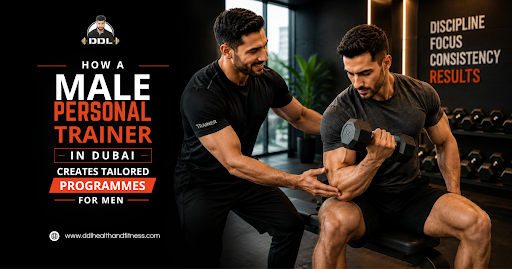
A good fitness programme should fit the individual, not force the individual to fit a standard routine. A male personal trainer in Dubai can create a programme around a client’s goals, current fitness level, lifestyle, schedule, and training preferences. For many men, having personalised guidance can make training more structured, focused, and easier to maintain.
At DDL Health & Fitness, personalized coaching begins with understanding the individual rather than applying the same workout plan to everyone. Whether the goal is building strength, improving fitness, managing weight, increasing muscle mass, or enhancing overall performance, a tailored approach considers the factors that can influence progress. This guide explains how male personal training for men Dubai can be adapted to individual needs and what to expect from the process.
|
Table of Contents
|
Why Personalised Training Matters
A male personal trainer in Dubai creates a programme by looking at the bigger picture, rather than focusing only on a target weight or fitness goal.
Training needs can vary based on:
- Current fitness and training experience
- Strength and cardiovascular fitness
- Muscle-building or weight management goals
- Available training time each week
- Lifestyle and recovery habits
- Preferred training environment
For men’s fitness training Dubai, a personalised approach can make the programme more practical and sustainable. A routine that fits realistically into a person’s lifestyle is often easier to maintain over the long term.
1. Starting With an Individual Assessment
Before creating a programme, a trainer should understand the client’s starting point. This helps establish realistic goals and avoid a one-size-fits-all approach.
A typical assessment may include:
- Goal discussion – identifying whether the focus is muscle building, strength, weight management, mobility, or general fitness.
- Fitness assessment – reviewing current movement ability, strength, and exercise experience.
- Lifestyle review – considering work schedules, sleep, stress, and available training time.
- Health screening – identifying relevant information that may affect exercise planning.
- Preference discussion – understanding which training styles and environments suit the client.
At DDL Health & Fitness, this initial understanding can help create a more practical and personalised starting point.
Why goals need to be specific
A goal such as “getting fit” is a useful starting point, but it can be difficult to measure. A trainer can help turn broad goals into clearer objectives, such as increasing strength, building muscle, improving cardiovascular fitness, or maintaining a consistent weekly exercise routine.
2. How a Male Personal Trainer in Dubai Matches Training to Individual Goals
A male personal trainer in Dubai may structure programmes differently depending on what the client wants to achieve.
For strength and muscle building
Training may focus on progressive resistance exercises, proper technique, and structured progression. The aim is to gradually improve strength and support muscle development while allowing sufficient recovery.
For weight management
A programme may combine strength training, cardiovascular exercise, daily movement, and sustainable lifestyle habits. The focus should remain on consistency rather than extreme or short-term approaches.
For fitness and performance
The programme may include:
- Functional strength exercises
- Cardiovascular conditioning
- Mobility and flexibility work
- Core training
- Progressive performance training
For male personal training for men Dubai, the right programme depends on individual goals, fitness levels, and the ability to progress safely.
3. Building Training Around Lifestyle and Recovery
Fitness programmes should also account for life outside the gym. Work schedules, travel, sleep, stress, and recovery can all affect training consistency.
A personalised plan may consider:
- The number of sessions possible each week
- Training duration
- Recovery requirements
- Energy levels
- Work and travel schedules
- Access to equipment
This is particularly useful for busy professionals who may need a flexible routine that can be adjusted when schedules change.
Pro Tip
The best fitness programme is not the most complicated one. Choose a plan that you can follow consistently, progress gradually, and adapt when your lifestyle changes.
4. How Programmes Change as Progress Changes
A tailored programme should evolve as the client’s fitness improves.
A trainer may regularly review:
- Strength progression
- Exercise technique
- Muscle-building progress
- Cardiovascular fitness
- Energy levels and recovery
- Changes in personal goals
For example, someone starting with basic strength exercises may gradually progress to more advanced resistance training. Another client may need a simplified programme during a particularly busy period.
This flexibility is one reason many people choose men’s fitness training Dubai with regular professional guidance instead of relying only on a fixed workout programme.
Personalised Training vs Generic Workout Plans
| Feature | Tailored Personal Training | Generic Workout Plan |
|---|---|---|
| Starting fitness level | Considered individually | Usually standardised |
| Exercise selection | Adapted to individual needs | Same for many users |
| Progression | Adjusted based on results | Often fixed |
| Schedule flexibility | Can be personalised | Limited |
| Technique feedback | Direct guidance available | Usually self-managed |
| Changing goals | Programme can evolve | May require a new plan |
5. Training at Home, Outdoors, or in a Gym
The right training environment depends on the individual. An at-home male personal trainer Dubai may be suitable for clients with demanding schedules, limited time, or a preference for training privately.
Home-based training can include:
- Bodyweight exercises
- Resistance bands
- Dumbbells and kettlebells
- Functional strength exercises
- Mobility and conditioning work
A gym environment may provide access to a wider range of equipment and heavier resistance options.
At DDL Health & Fitness, clients can consider the training environment that best supports their goals and lifestyle.
6. How to Choose the Right Male Personal Trainer
Choosing a male personal trainer in Dubai should involve more than comparing prices or social media profiles.
Consider:
- Relevant qualifications and experience
- Experience with your specific fitness goal
- Ability to personalise programmes
- Clear communication and coaching style
- Approach to progression and recovery
- Whether the training approach suits your lifestyle
It is also useful to ask how progress will be measured. A good trainer should be able to explain why certain exercises are included and how the programme may develop over time.
Getting Started Checklist
✓ Define your main fitness goal.
✓ Be honest about your current fitness level.
✓ Consider how many sessions you can realistically maintain.
✓ Discuss any injuries or physical limitations.
✓ Choose a training environment that suits your lifestyle.
✓ Review your progress regularly and adjust the programme when needed.
Conclusion
Working with a male personal trainer in Dubai can provide a more structured and individual approach to fitness. Instead of following a generic workout, a tailored programme can consider personal goals, fitness experience, lifestyle, training preferences, and recovery needs.
Whether the focus is muscle building, strength, weight management, or male personal training for men Dubai, the key is to create a programme that is realistic, progressive, and sustainable.
At DDL Health & Fitness, the focus is on understanding each client’s starting point and developing a structured approach that can adapt as their fitness and goals evolve. The right programme does not need to be overly complicated. It needs to be appropriate, consistent, and aligned with the individual’s objectives.
If you are looking for a male personal trainer in Dubai, contact DDL Health & Fitness to discuss your goals and explore a personalised training approach that suits your lifestyle.st month.
FAQs
1. How does a male personal trainer in Dubai create a personalised programme?
A trainer typically begins by assessing your fitness level, goals, exercise experience, lifestyle, and available training time. The programme can then be structured around suitable exercises, progression, recovery, and regular reviews, allowing adjustments as your fitness or goals change.
2. Is male personal training for men Dubai suitable for beginners?
Yes. A beginner programme can start with basic movement patterns, manageable exercise intensity, and a realistic schedule. The trainer can focus on proper technique and gradual progression rather than expecting you to begin with advanced exercises or demanding training routines.
3. Can I work with an at-home male personal trainer in Dubai?
Yes. Home-based personal training can be suitable for people who prefer privacy, convenience, or reduced travel time. Sessions can use available equipment such as dumbbells, resistance bands, or bodyweight exercises, while the programme is adapted to your available space and fitness goals.
4. What is included in men’s fitness training Dubai?
The content varies depending on individual goals. A programme may include strength training, muscle-building exercises, cardiovascular conditioning, mobility work, and progress tracking. The most suitable programme depends on your current fitness level, lifestyle, training preferences, and desired results.
5. Can a personal trainer help with muscle building and strength?
Yes. A structured programme can support muscle and strength development through appropriate resistance training, progressive overload, technique guidance, recovery, and consistent training. The specific programme should be adapted according to your experience, goals, available equipment, and ability to recover.
6. How often should I train with a personal trainer?
There is no single answer. Some clients benefit from one or two coached sessions per week alongside independent training, while others prefer more frequent support. The right schedule depends on your goals, experience, budget, availability, and recovery capacity.