
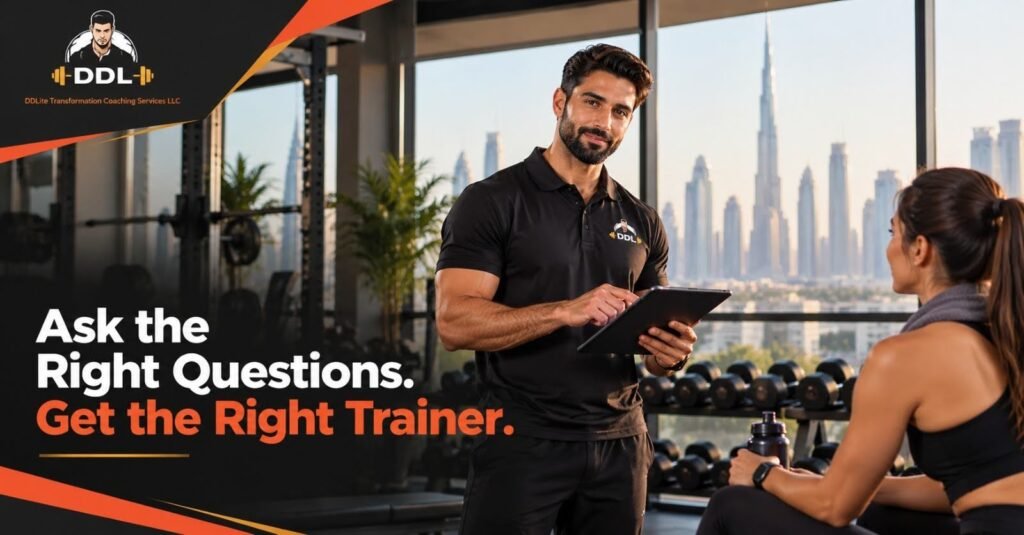
Choosing the right personal trainer in Dubai can make all the difference in achieving your fitness goals and making consistent progress. With so many fitness coaching options available, from boutique studios to online personal training programmes, finding the right fit can feel overwhelming. DDL Health & Fitness understands the importance of choosing a trainer who aligns with your goals, lifestyle, and fitness level. Before committing to a personal training programme, asking the right questions can help you evaluate a trainer’s qualifications, approach, experience, and ability to support your progress.
Whether you are beginning your fitness journey or looking to take your training to the next level, this guide explores five essential questions to ask before your first session, helping you make an informed decision and start with confidence.
A Common Starting Point: Uncertainty Before Day One
Consider a busy professional relocating to Dubai who wants to lose weight and build sustainable fitness habits. With limited time and no existing network of trusted referrals, navigating the many personal training services available can feel overwhelming. Before committing to a programme, they decide to ask five essential questions and the answers help them make a more informed decision.
Whether you prefer face-to-face coaching or online personal training, this framework will help you evaluate potential trainers and find an approach that aligns with your goals, lifestyle, and fitness level.
Question One: What Are Your Qualifications and Experience?
Choosing a qualified trainer is essential. A credible personal trainer in Dubai should hold a recognised fitness certification and be able to demonstrate relevant practical experience. Ask about their background working with clients who share your goals, particularly if you are looking for weight loss support or strength-building guidance.
What to look for:
- Recognised fitness certifications and relevant professional credentials.
- Experience working with clients at your current fitness level.
- A sound understanding of nutrition fundamentals relevant to your goals.
- Commitment to continuing professional development.
A trainer who cannot clearly explain their qualifications or experience may not be the right fit, regardless of how impressive their social media presence appears.
Question Two: How Do You Personalise Your Training Programmes?
Generic workout plans may not address your individual needs or deliver sustainable results. Whether you choose in person fitness coaching or an online personal training programme, your plan should reflect your goals, current fitness level, lifestyle, schedule, and preferences.
A quality trainer will begin with an assessment covering your fitness level, relevant injury history, daily routine, and exercise preferences before designing your programme. Be cautious of trainers who recommend the same routine to everyone without first understanding their clients’ needs.
Question Three: How Will You Track and Measure My Progress?
Progress tracking is an important part of effective personal training. Ask your prospective trainer how they will measure your development and how frequently they will review your results.
Look for a structured approach that includes:
- Regular fitness assessments at agreed intervals.
- Body composition measurements, where relevant to your goals.
- Performance benchmarks, such as improvements in strength, endurance, or mobility.
- Clear progress records and feedback throughout the programme.
If you are considering online personal training, ask how remote check-ins and progress reviews are managed. A well-organised programme should provide clear ways to monitor results, receive feedback, and make adjustments even without face-to-face sessions.
Question Four: What Happens If I Hit a Plateau or Need to Modify My Programme?
Every fitness journey comes with challenges. Progress may slow, work schedules may change, or you may need to adapt your workouts because of physical limitations. What matters is how your trainer responds to these situations.
Look for a trainer who:
- Reviews your progress and adjusts your programme when necessary.
- Has a clear process for reassessing goals and training methods.
- Can accommodate reasonable changes to your schedule and fitness needs.
- Understands that setbacks are a normal part of long-term progress.
Flexibility is particularly important if you are choosing a personal trainer in Dubai for the first time. Your programme should evolve as your fitness improves and your circumstances change.
Question Five: What Does a Typical Coaching Relationship Look Like Beyond the Sessions?
Scheduled workouts are only one part of a successful fitness journey. Daily movement, recovery, sleep, nutrition habits, and consistency can all influence your results. Ask your trainer what kind of guidance and accountability they provide between sessions.
This is especially important when comparing online personal training options, as the level of communication and ongoing support can vary between providers. A good trainer should explain what support is included, how you can ask questions, and how they will help you maintain consistency beyond your scheduled workouts.
Putting It All Together: A Simple Evaluation Framework
Before making your decision, compare potential trainers based on their qualifications, personalisation, progress tracking, adaptability, and ongoing support. DDL Health & Fitness can be explored as an option when researching fitness coaching that aligns with your individual goals and lifestyle.
The right trainer should offer more than a workout plan they should provide a clear, realistic approach that helps you build sustainable habits and work towards your fitness goals with confidence.
| Question | What a Strong Answer Looks Like | What to Watch Out For |
|---|---|---|
| Qualifications and experience | Accredited certification, relevant client experience | Vague answers, unverifiable credentials |
| Programme personalisation | Initial assessment before any plan is created | Generic pre-packaged programmes |
| Progress tracking | Clear metrics, regular check-ins, shared documentation | No structured measurement system |
| Handling plateaus | Proactive adjustments, flexibility built into the plan | Rigid one-size-fits-all approach |
| Between-session support | Accountability, lifestyle guidance, open communication | Sessions only, no wider support structure |
The Right Questions Lead to the Right Trainer
Choosing the right personal trainer in Dubai doesn’t require insider knowledge it starts with asking the right questions and understanding whether a trainer’s approach matches your goals, lifestyle, and expectations. Whether you prefer face-to-face personal training or the flexibility of online coaching, look for a professional who prioritises personalisation, transparent communication, progress tracking, and sustainable results.
At DDL Health & Fitness, the focus is on helping individuals make informed fitness choices and find an approach that works for them. Asking questions before your first session is an important step towards building a coaching relationship based on trust, clear expectations, and realistic goals.
Ready to Find Your Ideal Personal Trainer in Dubai?
Your fitness journey deserves more than a generic workout plan. It deserves an approach built around you your goals, your schedule, and your lifestyle.
Have questions before you commit? Let’s talk fitness!
Get in touch with DDL Health & Fitness to discuss your goals, explore suitable personal training options, and discover the next steps towards a stronger, healthier you.
Ask the right questions. Find your right fit. Take the first step today!