
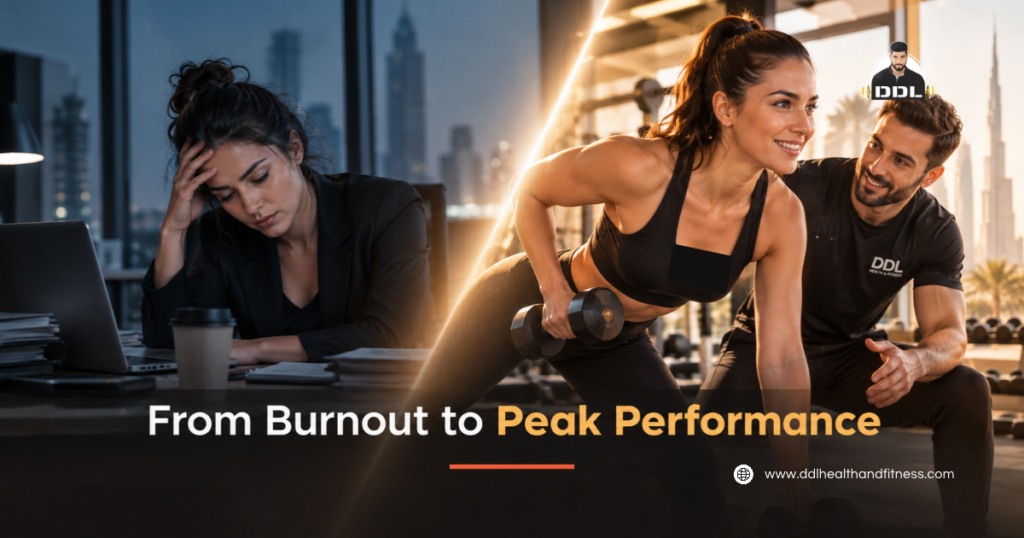
When work demands grow, personal health is often the first thing to suffer. Long hours, irregular meals, poor sleep and little time for exercise can leave even highly motivated professionals feeling exhausted. Over time, low energy, reduced concentration and a lack of motivation can make healthy habits harder to maintain.
Finding the best personal trainer in Dubai can be a practical step towards rebuilding a consistent fitness routine. The right coach can help busy professionals set realistic goals, follow a structured workout plan and make healthier choices without adding unnecessary pressure to their schedules.
Consider a professional who has spent months prioritising deadlines over exercise. Instead of chasing quick results, they begin with manageable workouts, improved recovery and simple nutrition changes. Gradually, fitness becomes part of their routine rather than another demanding task.
This illustrative client journey explores how a personalized approach from DDL Health & Fitness can support a move from physical fatigue towards better fitness, confidence and daily energy. It also explains how to recover from burnout with fitness, build sustainable habits and decide whether personal training is right for you.
Table of Contents
- Recognising the signs of burnout
- Why personalised fitness support matters
- Building a realistic training routine
- Improving recovery, sleep and nutrition
- Measuring progress beyond appearance
- Creating lasting fitness habits
- Frequently asked questions
1. Recognising the Signs of Burnout
Burnout is more than feeling tired after a busy day. Prolonged work-related stress can affect concentration, sleep, motivation and physical wellbeing. Recognising these changes early can help you decide what support you need.
For our illustrative client, the first step is understanding that doing more is not always the answer.
Common warning signs include:
- Feeling tired even after resting.
- Struggling to concentrate or make decisions.
- Skipping workouts because of low motivation.
- Relying on convenience foods and irregular meals.
- Experiencing muscle tension or disrupted sleep.
These signs do not automatically mean someone has burnout. Persistent fatigue can have several causes, so medical advice is important when symptoms continue or interfere with daily life.
The key lesson: Before increasing exercise intensity, assess your energy levels, current activity and recovery needs. Fitness should support your wellbeing, not become another source of stress.
2. Why Personalised Fitness Support Matters
A demanding schedule can make it difficult to know where to start. Generic workout plans may not account for your current fitness, previous injuries, available time or personal goals.
This is where the benefits of hiring a personal trainer in Dubai become relevant. Individual coaching can provide structure, exercise guidance and accountability while allowing the programme to adapt as your needs change.
A suitable trainer may help you:
- Set achievable short-term and long-term goals.
- Learn correct exercise technique.
- Choose appropriate training intensity.
- Schedule workouts around work and family commitments.
- Review progress and adjust the plan when necessary.
DDL Health & Fitness offers personalised training and nutrition support, with programme options designed around individual fitness goals.
What makes the best personal trainer in Dubai a good fit?
The best personal trainer in Dubai is not necessarily the person offering the hardest workout. Look for someone who assesses your needs, explains the training plan clearly, respects recovery and adjusts sessions to your progress.
Ask about relevant qualifications, experience, communication and how they handle pain, fatigue or missed sessions. A good coach should understand when to modify a workout and when a concern requires assessment by a healthcare professional.
3. Building a Realistic Training Routine
When energy is low, an intense exercise schedule can be difficult to maintain. A gradual approach makes it easier to build consistency without expecting immediate transformation.
The illustrative client begins with a manageable routine and increases activity according to comfort, recovery and progress.
A practical starting plan could include:
- Strength training: Begin with two manageable sessions each week, if appropriate for your fitness level.
- Walking: Add short walks during breaks or after work.
- Mobility work: Include gentle stretching or mobility exercises when useful.
- Rest days: Allow enough recovery between demanding sessions.
- Weekly reviews: Assess energy, soreness, sleep and adherence before increasing the workload.
The World Health Organization recommends that adults work towards 150 – 300 minutes of moderate-intensity aerobic activity each week, alongside muscle-strengthening activities on at least two days. People who are currently inactive should build up gradually rather than treat this as an immediate target.
For anyone wondering how to recover from burnout with fitness, the priority is to establish a manageable routine that supports overall health. Exercise can help wellbeing, but it is not a substitute for addressing the causes of prolonged stress.
4. Improving Recovery, Sleep and Nutrition
Training is only one part of a sustainable fitness plan. Sleep, nutrition, hydration and stress management also influence how you feel and how well you recover between sessions.
A holistic health coach in Dubai may help clients organise healthier routines around their everyday responsibilities. However, coaching should complement medical care where symptoms or health concerns require professional assessment.
Useful habits include:
- Eat regular, balanced meals: Include protein sources, vegetables, fruit, whole grains and suitable healthy fats.
- Stay hydrated: Drink water regularly, especially during hot weather and exercise.
- Protect sleep time: Keep a consistent bedtime and reduce late-night distractions.
- Manage daily pressure: Use short breaks, breathing exercises or relaxing walks.
- Respect recovery: Reduce training intensity when tiredness or soreness makes a session unsuitable.
Personal training versus self-directed exercise
| Feature | Training independently | Working with a personal trainer |
| Workout planning | Self-managed | Individually structured |
| Exercise technique | Requires self-learning | Coach can provide feedback |
| Accountability | Depends on personal habits | Regular check-ins may help |
| Flexibility | High | Can be adapted with the coach |
| Cost | Often lower | Requires a coaching budget |
Both approaches can work. The right choice depends on your experience, preferences, goals and resources.
Pro Tip: If you feel exhausted, do not automatically respond by training harder. Reduce the workload if needed, review your sleep and daily demands, and seek medical advice for persistent or unexplained fatigue.
5. Measuring Progress Beyond Appearance
Weight and body measurements can be useful for some fitness goals, but they do not tell the whole story. A person rebuilding healthy habits may notice improvements in consistency and everyday function before seeing visible physical changes.
A structured coaching programme can help track meaningful indicators, such as:
- The number of planned sessions completed.
- Changes in strength and exercise technique.
- Walking duration or general activity levels.
- Sleep consistency and perceived energy.
- Ability to maintain healthy routines during busy weeks.
For the illustrative client, progress means becoming more consistent rather than achieving a dramatic change within a fixed period.
This is one reason the benefits of hiring a personal trainer in Dubai may extend beyond workout instruction. Regular reviews can help identify obstacles, celebrate achievable milestones and keep expectations realistic.
Results differ between individuals. No responsible trainer should guarantee a particular weight change, recovery timeline or level of performance.
6. Creating Lasting Fitness Habits
Short-term motivation often changes from week to week. Long-term progress depends more on having a routine that remains practical when work becomes demanding.
The illustrative client now focuses on maintaining habits rather than pursuing perfection. This approach can make fitness easier to sustain.
Use this simple checklist:
- Schedule workouts around realistic commitments.
- Choose activities suited to your current ability.
- Plan meals and snacks ahead when possible.
- Make time for sleep and recovery.
- Review progress weekly without judging yourself harshly.
- Adjust the plan when work, health or family demands change.
- Seek professional support when fatigue or stress persists.
A holistic health coach in Dubai can help connect training, nutrition and lifestyle habits into a practical plan. However, fitness coaching is not mental health treatment. If ongoing stress, exhaustion or low mood affects daily life, consider speaking with a qualified healthcare professional.
With a realistic routine and appropriate guidance, exercise can become a regular part of life rather than another source of pressure.
Conclusion: From Burnout to a More Balanced Routine
Moving from constant fatigue towards better fitness does not require extreme workouts or a complete lifestyle overhaul. It starts with understanding your needs, setting achievable goals and making room for regular movement, balanced nutrition and recovery.
For professionals managing demanding schedules, the best personal trainer in Dubai can provide a structured approach that fits real life. Individual coaching may help improve exercise technique, build consistency and make progress easier to track. The aim is to create habits that remain manageable during both busy and quieter periods.
The experience described in this article is illustrative, but the principles are practical: start at an appropriate level, increase activity gradually and pay attention to how your body responds. If fatigue persists, seek medical advice rather than relying on exercise alone.
DDL Health & Fitness provides personalised training and nutrition support for people working towards their fitness goals. If you are ready to build a more consistent routine, contact DDL Health & Fitness to discuss your goals and explore a suitable training programme. Your first step does not need to be a major transformation. It can simply be a plan you can follow consistently.
Frequently Asked Questions
1. How can a personal trainer help with burnout-related fatigue?
A personal trainer can help you develop a manageable exercise routine, adapt training intensity and build consistent habits. However, a trainer cannot diagnose or treat burnout. Persistent fatigue may have medical or psychological causes, so consult a qualified healthcare professional if symptoms continue or affect everyday activities.
2. How do I choose the best personal trainer in Dubai?
Look for appropriate qualifications, relevant experience, individual assessments and clear communication. Ask how the trainer adapts programmes to your schedule, fitness level and recovery needs. Discuss fees, session arrangements and progress reviews before committing. The best choice is someone whose approach is safe, practical and suited to your goals.
3. How often should I exercise when I feel exhausted?
The right frequency depends on your health, current fitness and the reason for your exhaustion. Some people can begin with gentle walks and a small number of manageable sessions. Others may need rest or medical assessment first. Increase activity gradually and avoid pushing through unusual pain or persistent fatigue.
4. What are the benefits of hiring a personal trainer in Dubai?
Personal training can provide structured workouts, technique feedback, accountability and adjustments based on progress. It may also help busy professionals organise exercise around their schedules. Outcomes depend on individual circumstances and consistency. A trainer should set realistic expectations rather than promise guaranteed weight loss or rapid physical transformation.
5. Can a holistic health coach in Dubai help improve lifestyle habits?
A holistic health coach in Dubai may help organise exercise, nutrition, sleep routines and practical wellbeing goals. The scope of support depends on the coach’s qualifications. Coaching can complement appropriate healthcare, but it should not replace medical or mental health treatment when symptoms require professional care.
6. How long does it take to see results from personal training?
The timeline varies according to starting fitness, training consistency, nutrition, sleep, health and personal goals. Some people notice changes in routine or exercise confidence before visible physical changes. Review progress over time, adjust the plan when necessary and avoid comparing your results with another person’s experience.