
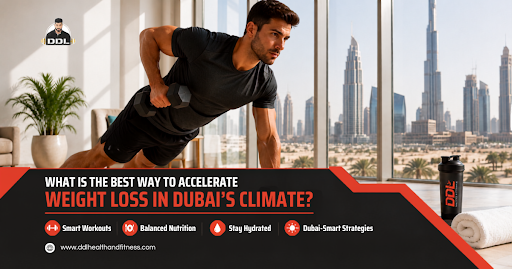
Losing weight in Dubai can feel different from doing so in a cooler climate. High temperatures and humidity can make outdoor exercise uncomfortable, reduce daily activity and increase the risk of dehydration. However, weight loss in Dubai does not require extreme workouts or restrictive diets. The most effective approach is to combine a balanced eating pattern, suitable exercise, hydration, sleep and habits that you can maintain throughout the year.
For people wondering how to lose weight in Dubai, the key is to adapt the method rather than abandon the routine when temperatures rise. Dubai Health Authority (DHA) recommends exercising during cooler parts of the day, staying hydrated and considering indoor alternatives during hot weather.
At DDL Health & Fitness, a practical approach can focus on building sustainable habits around your lifestyle, schedule and fitness level. This guide explains how to exercise safely in Dubai’s climate, structure your meals and create a realistic routine for long-term progress.
|
Table of Contents
|
Why Dubai’s Climate Can Affect Weight Loss
Dubai’s heat does not automatically make your body burn more fat. Sweating more during exercise mainly means losing fluids, not necessarily losing additional body fat. Trying to accelerate weight loss in Dubai by exercising in extreme heat or wearing heavy clothing can increase health risks.
DHA guidance advises people to exercise during cooler periods, avoid direct sunlight and stay hydrated when exercising in hot weather.
Key considerations
- Plan around the weather: Schedule outdoor walks or runs in the early morning or evening.
- Use indoor options: Treadmills , gyms, swimming pools and indoor walking areas can keep your routine consistent.
- Watch dehydration: Thirst, dizziness, unusual fatigue and headaches can be warning signs of heat-related illness.
- Avoid chasing sweat: More sweat does not mean faster fat loss.
- Listen to your body: Reduce intensity or stop if you feel overheated or unwell.
The goal is not to make every workout harder. It is to make your overall routine more consistent.
Choose the Right Exercise Strategy
Exercise supports energy expenditure, cardiovascular fitness, muscle strength and weight management. WHO recommends that adults get at least 150 minutes of moderate-intensity physical activity per week, or an equivalent combination of moderate and vigorous activity.
For weight loss in Dubai, your exercise programme should account for both your fitness level and the climate.
Consider combining:
- Cardio: Brisk walking, cycling, swimming or treadmill sessions.
- Strength training: Resistance exercises can help maintain and develop muscle.
- Daily movement: Short walks, stairs and active breaks can reduce sedentary time.
- Mobility work: Stretching and mobility sessions can complement your main workouts.
- Indoor alternatives: Move your outdoor routine indoors when temperatures become uncomfortable.
A consistent 30 – 45-minute workout that you can repeat regularly is generally more useful than an occasional extreme session.
Build a Sustainable Diet for Weight Loss
There is no single best diet for weight loss in Dubai for everyone. Your calorie needs, activity level, food preferences, health status and lifestyle all influence what works.
A sensible weight loss diet Dubai residents can follow should prioritise nutritious foods while limiting excessive calories from highly processed foods, sugary drinks and frequent high-calorie snacks.
What should a weight loss meal plan Dubai residents consider?
A practical weight loss meal plan Dubai can include:
- Lean protein such as fish, chicken, eggs, yoghurt, beans and lentils
- Plenty of vegetables and whole fruits
- Whole grains and other high-fibre carbohydrate sources
- Moderate portions of healthy fats such as nuts and seeds
- Water or low-calorie drinks instead of sugary beverages
WHO describes a healthy diet around four principles: adequacy, balance, moderation and diversity. It also recommends choosing a variety of minimally processed and unprocessed foods.
A personalised diet plan for weight loss Dubai residents can actually follow is more useful than eliminating entire food groups without a clear reason.
Stay Hydrated Without Adding Extra Calories
Hydration is especially important when exercising in a hot environment. DHA’s current physical activity guidance recommends drinking water before, during and after exercise and exercising during cooler parts of the day.
However, hydration does not mean drinking large amounts of high-sugar sports drinks during every workout.
Try these habits:
- Carry water when leaving home.
- Drink regularly throughout the day.
- Increase attention to hydration around workouts.
- Choose water or low-calorie options for routine exercise.
- Replace fluids after significant sweating.
If you have a medical condition or take medication that affects fluid balance, seek personalised advice from your healthcare professional.
Create a Routine You Can Maintain
The best strategy for how to lose weight in Dubai is one that fits into your actual lifestyle. The UAE Ministry of Health and Prevention’s national weight-management guideline takes a broader approach that includes nutrition, physical activity, behavioural change and, where clinically appropriate, medical or surgical intervention.
Focus on these habits:
- Set realistic weekly activity goals.
- Prepare meals before busy working days.
- Keep healthier snacks available.
- Prioritise adequate sleep.
- Track progress beyond the weighing scale.
- Review your routine when progress stalls.
The CDC also notes that healthy weight management involves nutrition, physical activity, sufficient sleep and stress management, and that gradual weight loss is generally more sustainable than rapid loss.
| Pro Tip |
| Don’t let Dubai’s summer heat stop your progress. Instead, change the environment around your workout. Move your walking session indoors, exercise early in the morning or choose an air-conditioned fitness facility. Consistency matters more than forcing yourself through extreme heat. |
Outdoor vs Indoor Exercise in Dubai
| Feature | Outdoor Exercise | Indoor Exercise |
|---|---|---|
| Heat exposure | Higher | Lower |
| Weather dependence | High | Low |
| Best timing | Early morning/evening | Flexible |
| Exercise options | Walking, running, cycling | Gym, treadmill, swimming, classes |
| Summer consistency | Can be challenging | Easier to maintain |
Dubai’s current public-health guidance specifically recommends cooler times, shade and indoor alternatives during hot weather.
Weight-Loss Checklist
Before starting your routine, check whether you can:
✓ Choose realistic weekly activity goals
✓ Plan meals around protein, vegetables and high-fibre foods
✓ Keep water available throughout the day
✓ Schedule exercise around Dubai’s weather
✓ Include both cardio and strength training
✓ Limit sugary drinks and highly processed snacks
✓ Get adequate sleep
✓ Monitor progress consistently
✓ Adjust your routine instead of giving up when results slow
A structured approach is particularly useful when your work, social schedule and climate make consistency difficult.
FAQs About Weight Loss in Dubai
1. What is the fastest safe way to lose weight in Dubai?
The safest approach is not to chase rapid weight loss through extreme heat, dehydration or severe calorie restriction. A sustainable calorie deficit combined with regular physical activity, adequate hydration, sleep and balanced nutrition is more appropriate. Individual results vary, so people with medical conditions should seek professional guidance.
2. Does exercising in Dubai’s heat burn more fat?
Not necessarily. Hot-weather exercise can increase sweating and fluid loss, but losing water is not the same as losing body fat. DHA specifically warns against using excessive clothing or extreme heat to try to lose weight faster. Exercise should be adapted to the weather and performed safely.
3. What is the best diet for weight loss in Dubai?
The best diet for weight loss in Dubai is one that provides appropriate nutrition while supporting a sustainable calorie deficit and fits your preferences and lifestyle. A balanced eating pattern can include vegetables, fruits, whole grains, lean proteins and healthy fats rather than relying on restrictive diets.
4. Can I follow a weight loss meal plan Dubai residents use during summer?
Yes, but a weight loss meal plan Dubai residents follow should be personalised to individual calorie needs, activity levels and dietary preferences. Include hydrating foods, vegetables, fruit and nutritious protein sources while limiting high-calorie drinks and heavily processed foods.
5. How often should I exercise for weight loss?
WHO recommends at least 150 minutes of moderate-intensity physical activity per week for adults, alongside muscle-strengthening activities. Your programme can be divided across the week and adapted to your fitness level.
6. How can I lose weight if I cannot exercise outdoors in Dubai?
You can maintain activity indoors with treadmill walking, cycling, swimming, resistance training, fitness classes or other suitable activities. DHA’s summer guidance includes indoor exercise as an option when outdoor conditions are too hot.
Conclusion
The most effective approach to weight loss in Dubai is not to work harder in the heat but to work smarter around it. A balanced weight loss diet Dubai residents can maintain, regular exercise, adequate hydration, sufficient sleep and realistic behavioural changes can create a stronger foundation for long-term progress.
If outdoor exercise becomes difficult during hotter months, move your workouts indoors or schedule them during cooler periods. Likewise, instead of following an extreme diet plan for weight loss Dubai residents may find it difficult to maintain, focus on nutritious meals and sustainable portion control.
At DDL Health & Fitness, the focus can be on helping you build a practical routine that fits your goals, fitness level and Dubai lifestyle. If you’re ready to take the next step, speak with the team to discuss a personalized approach to your weight-management goals.
Your climate shouldn’t stop your progress, your routine should adapt to it.